
How to Choose a Custom Packaging Manufacturer: Beyond Price and Quality
Choosing a custom packaging manufacturer is one of the most important sourcing decisions for a growing brand. While competitive pricing and product quality are essential, they do not tell the whole story.
A supplier may produce an excellent sample but struggle with complicated assembly. Another may offer attractive unit prices but lack the equipment needed for consistent, high-volume production. Some manufacturers specialize in automated boxes, while others focus primarily on handmade luxury packaging.
The right manufacturing partner should understand your product, recommend an appropriate production method, and balance design, efficiency, cost, and quality throughout the project.
This guide explains what B2B buyers should evaluate when selecting a custom packaging supplier—and why having access to both automation and skilled craftsmanship can make a meaningful difference.

1. Why Price and Quality Are Only the Starting Point
When requesting quotations from several packaging manufacturers, comparing prices is straightforward. Understanding what each supplier can actually produce is more complicated.
Two factories may quote the same rigid box design but use different materials, equipment, assembly methods, inspection procedures, and production schedules.
A lower quotation does not necessarily mean lower total sourcing costs. Quality problems, structural redesign, missed deadlines, inefficient packing, and inconsistent repeat orders can create additional expenses.
A better approach is to evaluate the supplier's complete manufacturing capabilities alongside its price proposal.
Key takeaway: The best custom packaging manufacturer for your project is not necessarily the one offering the lowest unit price. It is the supplier whose production capabilities match your box structure, quality expectations, budget, and delivery requirements.
2. Evaluate Real Manufacturing Capabilities, Not Just Product Photos
An extensive product catalog is useful, but it does not fully explain how a factory handles different packaging structures.
Before selecting a manufacturer, buyers should understand which processes are performed in-house, which require outside coordination, and how production is organized.
Important capabilities include structural engineering, printing, surface finishing, die-cutting, V-grooving, box forming, manual assembly, insert production, and inspection.
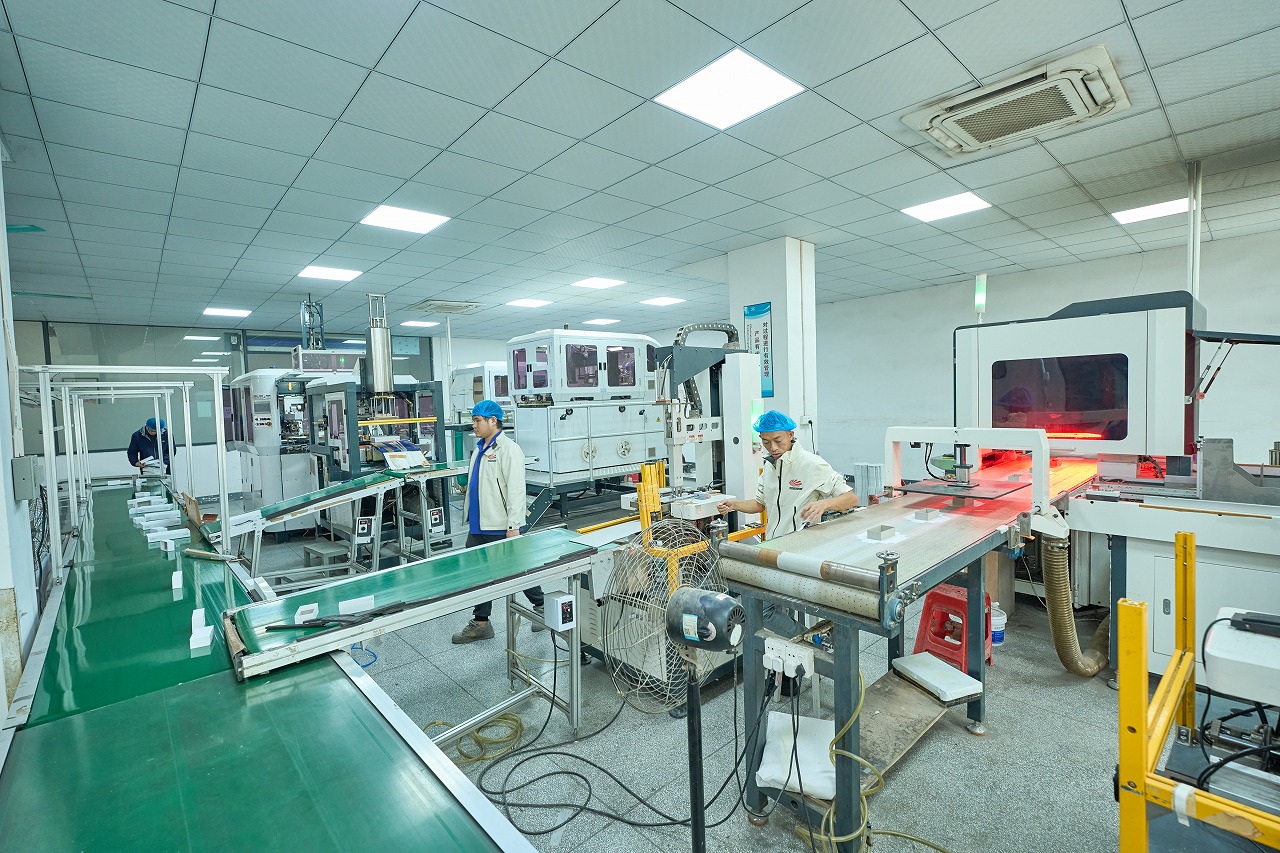
For example, DHP Factory's manufacturing facilities combine Heidelberg offset printing, automated converting equipment, structural processing, rigid box production, and skilled assembly.
This combination enables the factory to evaluate different packaging designs according to their actual manufacturing requirements.
3. Why Automation and Skilled Craftsmanship Should Work Together
Automation offers efficiency and repeatability, while manual production provides flexibility for structures that require individual positioning, multiple components, or intricate finishing.
Neither approach is universally superior. A professional custom packaging manufacturer should select the process that best suits each project.
Automated Production for Suitable Box Structures
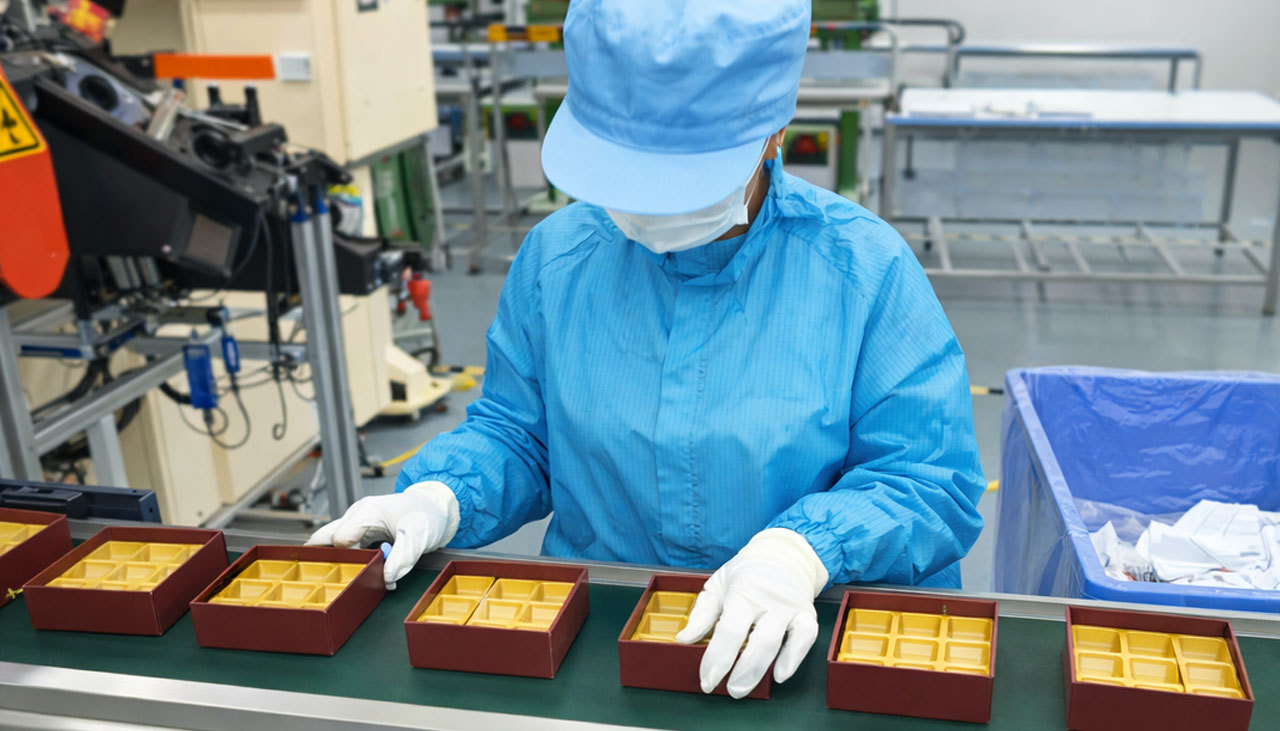
Automated production equipment is valuable for repeatable forming, wrapping, cutting, and assembly operations.
At DHP Factory, automated manufacturing supports suitable folding-style rigid structures and lid-and-base boxes, depending on their construction and production requirements.
Machine-assisted production can improve efficiency and dimensional repeatability when a box design is compatible with the equipment.
Four Standard Handmade Production Lines
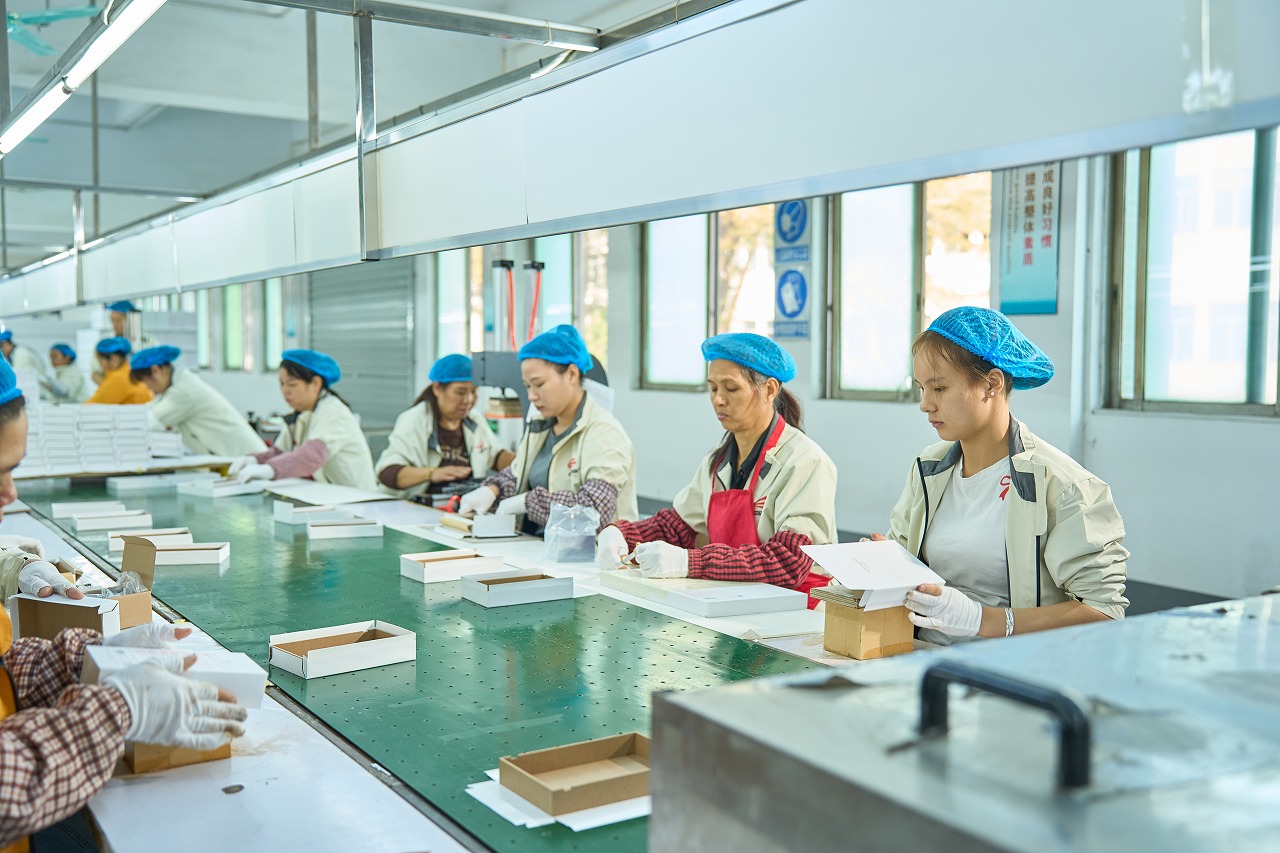
Some premium rigid boxes require manual wrapping, assembly, material handling, and finishing operations.
DHP Factory operates four standard handmade box production lines for conventional handmade packaging structures.
These lines allow trained production teams to manage operations that benefit from manual positioning and careful attention to presentation details.
Two Specialized Lines for Complex Packaging
More elaborate packaging often involves several assembly stages, unusual structures, multiple compartments, decorative accessories, or precise component integration.
DHP Factory maintains two specialized handmade production lines for complex, multi-step packaging projects.
This production arrangement is particularly relevant when a brand requires an unusual opening sequence or a sophisticated presentation experience that cannot be efficiently completed through standard automated equipment.
Not Sure Which Production Method Fits Your Packaging?
From automated rigid box manufacturing to specialized handmade assembly, DHP Factory can help evaluate the most suitable production approach for your box structure, order quantity, and finishing requirements.
Discuss Your Packaging DesignAutomated vs. Handmade Packaging Production
| Production Method | Typical Strength | Suitable Applications | Key Consideration |
|---|---|---|---|
| Automated Production | Repeatability and processing efficiency | Compatible standard rigid box structures | Machine compatibility and production setup |
| Standard Handmade Lines | Flexible assembly and finishing | Conventional handmade rigid gift boxes | Labor requirements and process consistency |
| Complex Handmade Lines | Multi-step construction and component integration | Luxury presentation boxes and intricate structures | Assembly sequencing, training, and inspection |
The ability to select among these methods provides flexibility when developing packaging for different products, order volumes, and budgets.
4. Can Your Supplier Handle Complex, Multi-Step Packaging?
Luxury packaging is often more demanding than a conventional lid-and-base box.
Double-door structures, book-style magnetic boxes, layered compartments, decorative ribbons, fitted inserts, and unusual opening mechanisms may require multiple assembly stages.
Each additional component introduces potential challenges involving dimensional accuracy, material compatibility, alignment, and handling.
For these projects, buyers should ask whether the manufacturer has experience with similar structures and whether a physical sample can be produced before mass production.
DHP Factory's specialized handmade production lines are intended to support this category of packaging.
Brands can explore custom rigid packaging structures and custom collapsible rigid box solutions to compare different construction approaches.
The objective is not to make every package more complicated. It is to use complexity only where it creates meaningful functional or brand value.
5. How Manufacturing Methods Affect Packaging Cost and Lead Time
Manufacturing costs depend on more than raw materials. Tooling, machine setup, production quantity, manual operations, structural complexity, finishing, and inspection requirements all influence pricing.
For a suitable high-volume structure, automation may reduce repetitive manual work. For a highly customized presentation box, skilled assembly may provide a more practical way to achieve the required result.
A manufacturing partner with multiple production options can evaluate these trade-offs before recommending a solution.
For example, a brand may be able to simplify an unnecessary internal component, adjust the insert design, or select a more efficient forming method without changing the essential appearance of the packaging.
However, savings should be confirmed through actual quotations and samples rather than assumed from the production method alone.
Buyers should compare overall cost, realistic lead time, product protection, and approved quality standards—not unit price in isolation.
6. Quality Control, Certifications and Factory Audits
Manufacturing flexibility must be supported by a reliable quality management system.
Before placing an order, buyers should review how the factory checks incoming materials, printing quality, structural dimensions, assembly consistency, and finished packaging.
DHP Factory's published quality capabilities include color measurement, structural inspection, production checks, and manufacturing process controls.
Relevant Certifications and Assessments
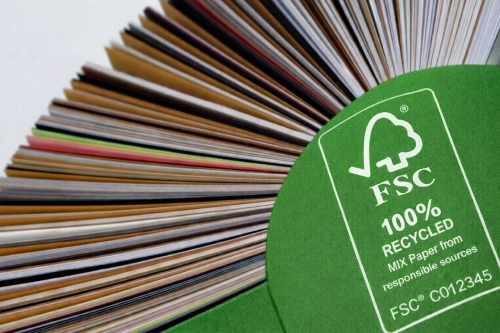
DHP Factory's certificates and compliance information includes ISO 9001:2015 quality management certification, FSC-related certification documentation, and Sedex SMETA audit information.
The company also reports having completed an LVMH Allegro social and environmental assessment.
These documents provide useful supplier-review information, but buyers should verify their current validity, applicable scope, and relevance to the intended order.
Third-party audits and management certifications do not replace product-specific inspections or agreed acceptance standards.
7. From Sampling to Mass Production: A Reliable Approval Process
Even an experienced manufacturer should not rely on visual references alone when developing a new custom box.
A structured approval process can help reduce avoidable errors before production begins.
Requirement review: Confirm product dimensions, weight, materials, packaging structure, and quantity.
Structural development: Prepare suitable dielines and construction proposals.
White sample: Check dimensions, opening movement, product fit, and structural stability.
Pre-production sample: Confirm printing, colors, finishes, materials, and assembly details.
Mass production: Follow approved specifications and inspection requirements.
Final inspection: Check agreed quality criteria before shipment.
DHP Factory explains this process in its guide to custom rigid box sampling and mass-production approval.
The objective is to ensure that packaging approved during development can be reproduced consistently under commercial manufacturing conditions.
Have a Packaging Design Ready for Production?
Send us your drawings, product dimensions, reference samples, and estimated order quantity. Our team can review structural feasibility, material options, sampling requirements, and production considerations.
Request a Packaging Consultation8. Why One Comprehensive Manufacturing Partner Can Simplify Sourcing
Brands often need more than one packaging structure across their product portfolio.
A fragrance company may require rigid perfume gift boxes, simpler promotional packaging, custom inserts, and limited-edition presentation sets. A cosmetics brand may need both standardized packaging and elaborate seasonal collections.
Working with a manufacturer that understands multiple structures and production methods can simplify technical communication, sampling coordination, and quality expectations.
With automated manufacturing, four standard handmade lines, and two specialized complex-assembly lines, DHP Factory can review a wide range of paper packaging projects within one manufacturing organization.
This does not mean every product should be manufactured using the same process. It means each product can be evaluated according to the production method best suited to its design.
For international brands, that flexibility can be valuable when developing multiple packaging formats, updating collections, or preparing future product launches.
9. Custom Packaging Manufacturer Selection Checklist
Before selecting a packaging supplier, consider the following questions:
Does the factory manufacture the required box structures?
Can it explain which processes are automated and which are handmade?
Does it have dedicated resources for complex packaging assembly?
Can it review the design for manufacturing feasibility?
Are structural and pre-production samples available?
Can it provide relevant quality management and audit documentation?
How are printing, finishing, and dimensional tolerances controlled?
Can it explain the factors affecting cost and lead time?
Does it have experience with export packaging and shipment protection?
Can it support communication and technical adjustments throughout the project?
A professional supplier should be able to explain not only what it can manufacture, but also why a particular construction or production method is appropriate for your project.
10. Frequently Asked Questions
What should I look for in a custom packaging manufacturer?
Evaluate structural design capability, equipment, skilled labor, sampling procedures, quality management, communication, and experience with your required packaging type. Price should be considered alongside these factors.
Is automated packaging production always better than handmade production?
No. Automation is effective for compatible repeatable operations, while handmade production provides flexibility for intricate structures and detailed assembly. The correct choice depends on the project.
Can one manufacturer produce both standard and complex rigid boxes?
Yes, if it has appropriate machinery, trained production teams, technical planning, and quality controls. DHP Factory combines automated production with standard and specialized handmade lines.
Does handmade luxury packaging always cost more?
Not necessarily. Cost depends on complexity, order volume, tooling, material usage, labor, and finishing. Some specialized structures are more practical to assemble manually than to automate.
How can I verify a packaging factory's capabilities?
Request relevant production photographs or videos, physical samples, applicable certificates, manufacturing process information, and a factory visit or video tour where appropriate.
What information should I provide for a packaging quotation?
Provide product dimensions, box style, materials, artwork, finishing requirements, insert specifications, estimated quantity, and delivery destination. Reference samples or drawings are also helpful.
Get a Manufacturing Solution, Not Just a Box Price
Choosing a custom packaging manufacturer should be about finding the right balance of design, production expertise, efficiency, quality, and cost.
At DHP Factory, automated equipment works alongside four standard handmade box production lines and two specialized lines for complex, multi-step packaging.
Whether you need a standard premium rigid box or an intricate luxury presentation structure, our team can review your packaging requirements and discuss appropriate materials, production methods, and sampling options.
Send us your box design, dimensions, estimated order quantity, finishing requirements, and target market. We can help you evaluate manufacturing feasibility before preparing a quotation.